🌱pouch.eco

Molded Pulp vs. Corrugated Cardboard: The Ultimate Comparison

Discover which sustainable packaging solution optimizes shock absorption, slashes fulfillment times, and reduces your DIM weight freight costs.

Split screen comparison of a premium molded pulp protective box versus a standard corrugated cardboard box

Molded Pulp vs. Corrugated Cardboard: The Ultimate Showdown

When selecting sustainable protective packaging for e-commerce, the debate often comes down to two primary contenders: premium molded pulp eco-degradable boxes and standard corrugated cardboard. While both are recyclable and paper-based, they serve fundamentally different protective roles during transit.

Corrugated cardboard offers excellent stacking strength and is the undisputed king of outer master cartons. However, when it comes to internal product suspension and shock absorption, folded cardboard inserts often fall short, requiring complex assembly that slows down your fulfillment line. Molded pulp, on the other hand, is sculpted directly to the contours of your product, providing omni-directional cushioning without the need for manual folding or secondary void fill.
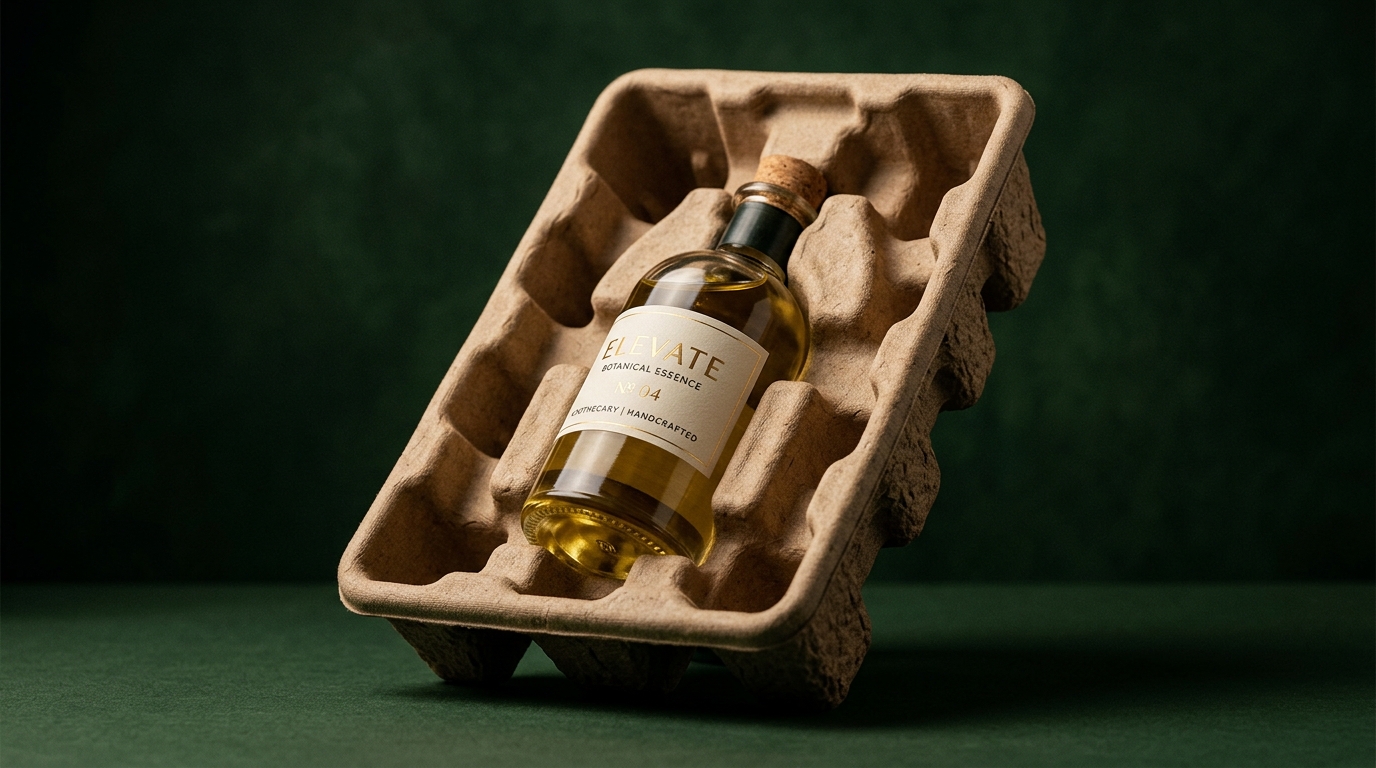
Molded pulp packaging securely holding a glass bottle

Thermoformed molded pulp provides unparalleled protective cushioning for delicate items.

In this technical breakdown, we compare these two titans of sustainable packaging across G-force shock absorption, warehouse density, assembly speed, and overall carbon footprint. Understanding these parameters is crucial for optimizing your B2B wholesale supply chain. Read more about integrating these into your automated lines in our Automation Guide.


5 Packaging Pain Points & Solutions

01

Slow Fulfillment and Assembly Times

Solution:

Corrugated inserts require complex manual folding (origami-style), which severely bottlenecks fulfillment speeds. Molded pulp trays are pre-formed and ready to use instantly. Simply drop the product into the cavity, increasing packing throughput by up to 300%.

02

Edge Crushing and Impact Damage

Solution:

Cardboard flutes crush upon impact and do not recover, leaving the product vulnerable to subsequent drops. Molded pulp distributes impact energy across a continuous 3D surface, effectively dissipating G-forces and protecting delicate corners.

03

High Dimensional Weight (DIM) Freight Costs

Solution:

To achieve sufficient protection with cardboard, you often need a larger outer box to accommodate thick folded buffers. Molded pulp is precision-contoured, allowing you to shrink the overall cubic volume of the package by 15-20%, instantly reducing DIM weight shipping charges.

04

Tooling and Setup Costs

Solution:

Cardboard die-cutting plates are cheap (often under $100), whereas molded pulp CNC aluminum tools can cost $1,500+. The solution is scale: for volumes over 10,000 units, the labor savings in fulfillment and freight reduction rapidly amortize the higher initial pulp tooling cost.

05

Inconsistent Product Presentation

Solution:

Folded cardboard can look messy with visible tabs and slots. Thermoformed molded pulp provides a sleek, seamless presentation cavity. We pair this with a custom printed kraft sleeve to deliver an Apple-tier unboxing experience that builds brand equity.

engineerTitle

🔬 Expert Engineering Insight

"When auditing a client's fulfillment line recently, we found they were spending 45 seconds manually assembling a die-cut cardboard insert for a glass cosmetics bottle. By switching them to a custom thermoformed molded pulp tray, we reduced packing time to just 4 seconds per unit. While the pulp part cost $0.08 more than the cardboard insert, the massive reduction in warehouse labor and a 12% drop in breakages resulted in a net saving of $0.42 per shipment."

Ryan Wong
Ryan Wong

14+ Years Packaging Engineering | GRS & FSC Auditing Expert

Polytechnic materials science expert helping 500+ global brands scale from prototype testing to industrial vertical packaging lines.

Have a technical question? Schedule a 15-minute packaging audit with Ryan →

Performance Matrix: Pulp vs. Cardboard Inserts

MetricThermoformed Molded PulpDie-Cut Corrugated Insert
Shock AbsorptionExcellent (Omni-directional)Good (Flute-dependent)
Packing SpeedFast (Drop-in)Slow (Manual folding)
Warehouse DensityHigh (Nestable)Medium (Flat-packed)
Tooling CostHigh ($1500+ CNC)Low (<$150)
Minimum Volume (MOQ)5,000+ units500+ units

Frequently Asked Questions

Can molded pulp replace E-flute corrugated boxes completely?

Molded pulp is generally used for internal product suspension (inserts). You still typically need an outer E-flute or B-flute corrugated shipper box to protect against punctures and provide a printable exterior for shipping labels.

Is corrugated cardboard more eco-friendly than molded pulp?

Both are highly eco-friendly as they are paper-based, recyclable, and compostable. However, molded pulp is often made from the lowest grade of recycled paper (like old newsprint), giving a second life to fibers that are too short to be turned back into cardboard.

How much warehouse space can I save by switching to molded pulp?

Molded pulp trays are nestable. A stack of 1,000 nested pulp trays might be 1 meter high. The equivalent 1,000 folded cardboard inserts (if pre-assembled) would take up 5-10 times that volume. Even flat-packed cardboard takes up more space.

GLOBAL STANDARDS FOOD SAFE COMPLIANT

Standard Factory Quality Control & Material Auditing

Our general quality management system guarantees that every packaging batch meets international safety requirements. We perform rigorous mechanical, thermal, and barrier tests from raw materials to final shipping pallets to ensure complete peace of mind.

ASTM Validated

Gas Transmission

Gas transmission rate tests verify material specification sheets.

QC PASSED
FDA Food Grade

Chemical Safety

Zero chemical odor or harmful heavy metal contamination.

QC PASSED
> 30 N/15mm

Heat Seal Strength

Verifies strong and secure heat seal seams for leak prevention.

QC PASSED
ISO 9001:2015 Audited

Manufacturing Standard

Strict quality logs maintained for traceability of every batch.

QC PASSED
ASTM D4169 Compliant

Transit Durability

Simulated shipping tests ensure packages arrive in pristine condition.

QC PASSED
High Structural Integrity

Tensile Strength

Film properties optimized for smooth packaging line operation.

QC PASSED

Ready to Get Started?

Contact our packaging experts for a free consultation and quote.