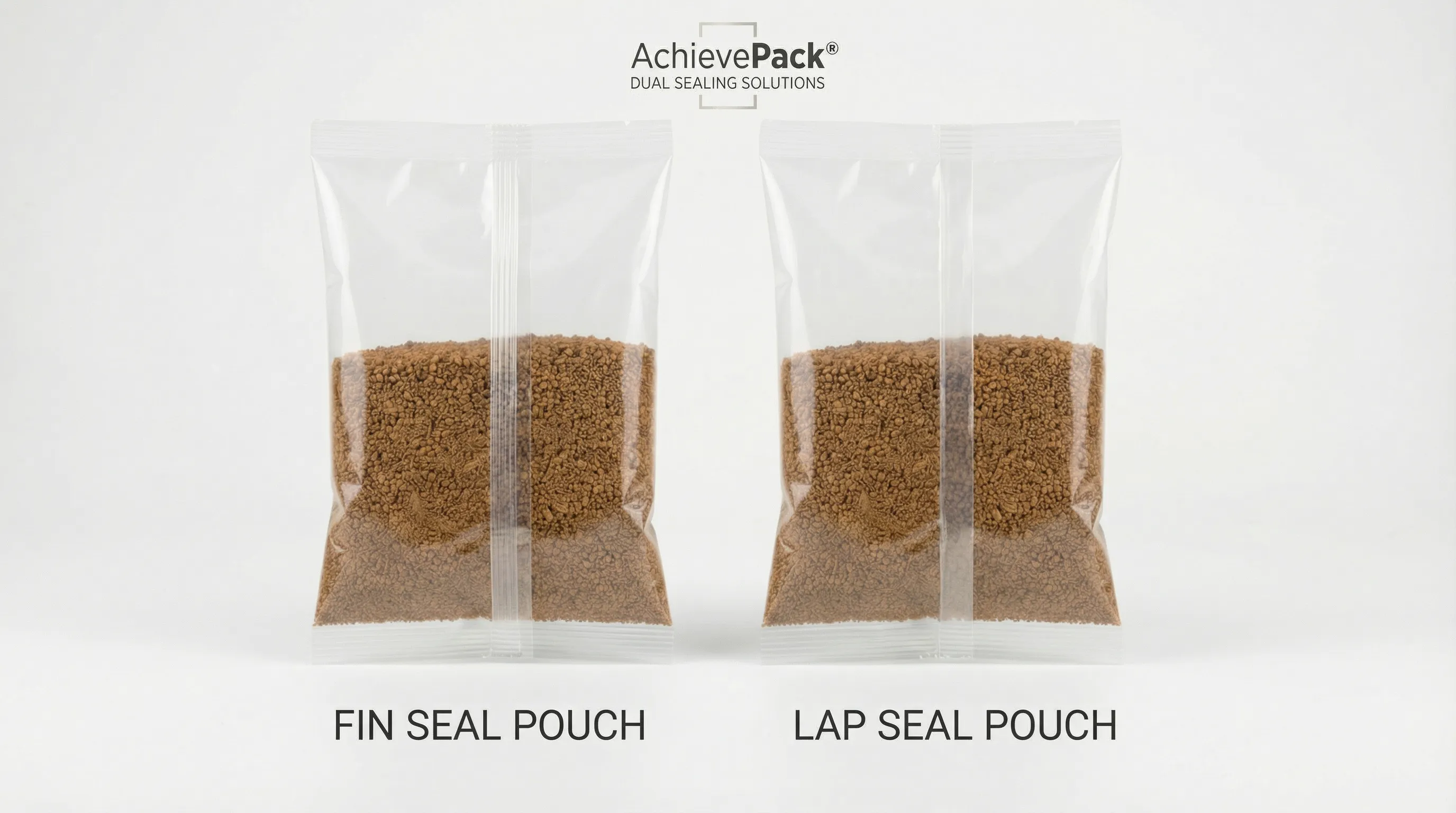
Understanding Flexible Packaging Back Seams
When a flat packaging film is rolled and formed into a pouch on a vertical form fill seal (VFFS) or horizontal form fill seal (HFFS) machine, the film edges must be sealed down the back. This joint is known as the back seam. Selecting the correct seam type is a critical engineering decision that affects the pouch's barrier properties, structural integrity, and manufacturing cost.
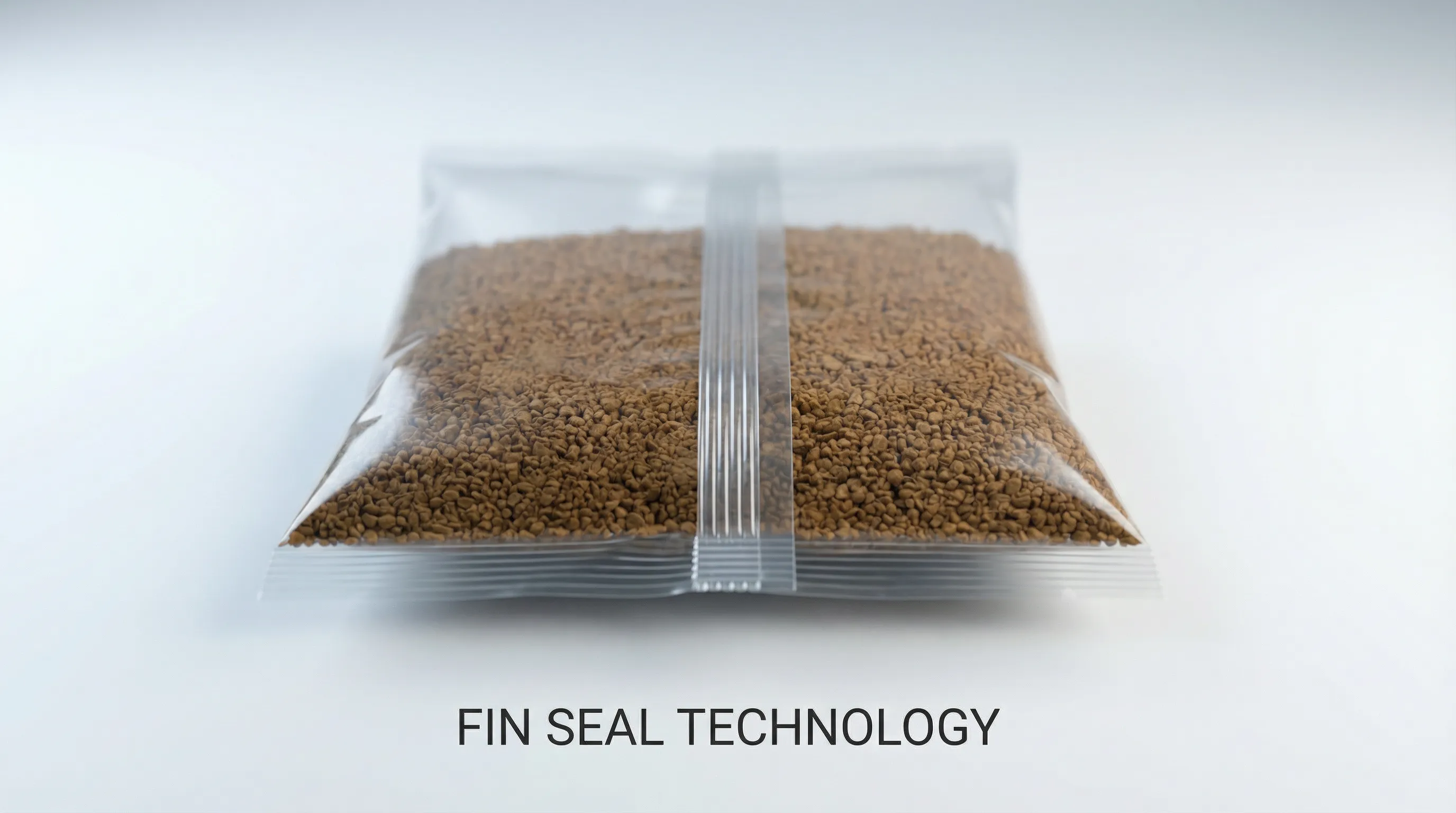
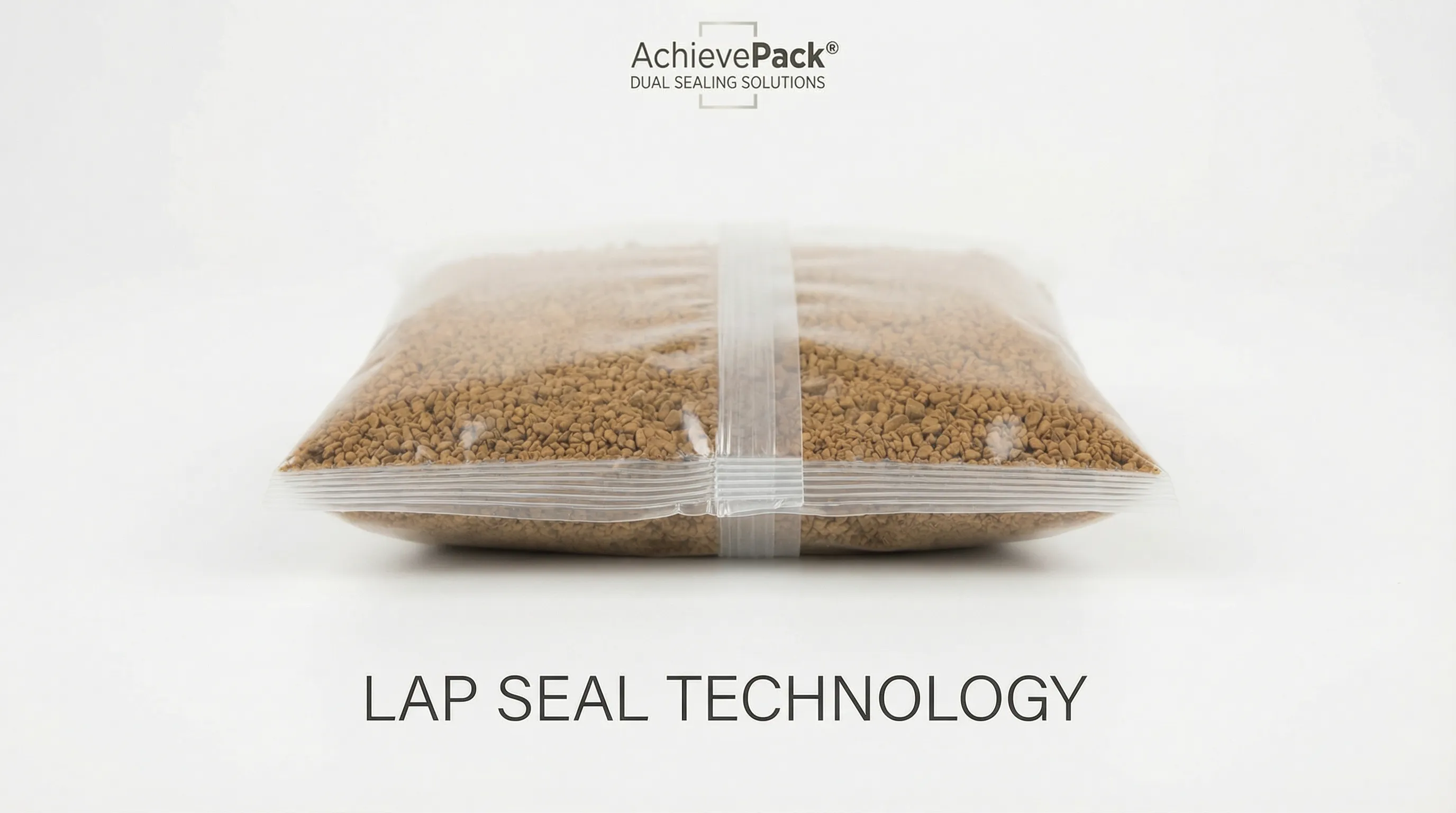
For high-barrier pouches containing sensitive goods like coffee, infant formula, or liquid concentrates, a robust seal is mandatory. Conversely, lightweight snack packaging often prioritizes material savings and graphic continuity.
5 Sealing Pain Points & Engineering Solutions
1. Seam Bursting and Leaking During Transit
Lap seals depend on the adhesion between the inner sealant and outer heat-resistant layers. Under shipping pressure, this weak interface can fail. Solution: We utilize Fin Seals (inside-to-inside PE bonding) to create a high-strength hermetic weld, yielding a 99.9% leak-free transit rate.
2. Graphic Interruption on the Back Panel
Fin seals create a protruding fin that can split and distort critical barcodes, nutrition tables, or branding text. Solution: We offer tacked-down fin seals where the fin is flattened and heat-sealed to one side, keeping the back panel smooth and readable.
3. High Film Material Waste and Overhead
Fin seals require an extra 12-20mm of film width per pouch to form the pinched fin, leading to high material costs. Solution: For non-sensitive, lightweight items like potato chips, we transition the line to a Lap Seal, saving up to 15% in raw film area.
4. Channel Leaking in Liquid or Powder Packaging
Liquid or fine powder can get trapped in the junction of a lap seal, creating channels for air and moisture. Solution: We enforce multi-point temperature-calibrated fin seals that melt and fuse the inner polyethylene layers, blocking product migration.
5. Wrinkling and Burn-Through During High-Speed Sealing
Inconsistent dwell times or temperature spikes on VFFS seal jaws can cause film wrinkling or seal burn-through. Solution: We recommend co-extruded films with a wider seal window (e.g., MOpp/PE) paired with continuous-motion seal bar rollers.
From Ryan Wong's Engineering Notebook
🔬 Expert Engineering Insight
"During a high-speed Vertical Form Fill Seal (VFFS) production run for a BRC-certified coffee client, we encountered persistent micro-leaks along the back seam. The client was utilizing a co-extruded film with a Lap Seal structure to save 12% on film consumption. However, because the outer polyester layer wasn't fully compatible with the inner polyethylene sealant layer under high-speed thermal contact, microscopic channels formed. We redesigned the flow-wrap forming collar to switch to a tacked-down Fin Seal (inside-to-inside bonding). This change eliminated the leakage rate entirely (reducing it from 4.2% to 0.0%) while maintaining a flat, retail-ready back panel."

Ryan Wong
Co-Founder & Chief Packaging Engineer (14+ Years Experience)
Have a technical question? Schedule a 15-minute packaging audit with Ryan →Visual Comparison
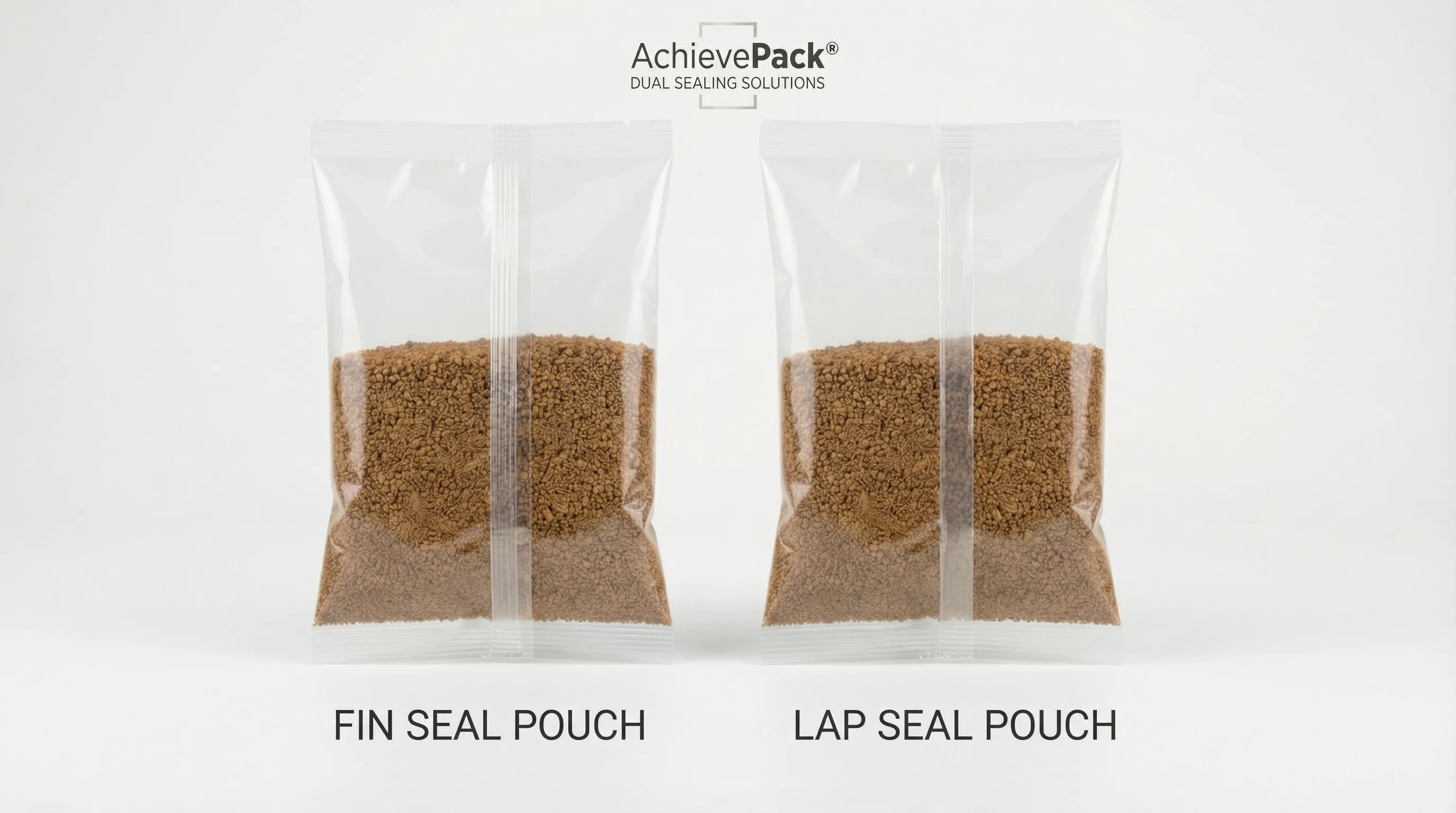
Continuous film alignment comparison between inside-to-inside fin seal and inside-to-outside lap seal structures.
Technical Specification Matrix
| Parameter | Fin Seal Specification | Lap Seal Specification |
|---|---|---|
| Seal Structure | Inside-to-Inside (Sealant to Sealant) | Inside-to-Outside (Sealant to Outer Layer) |
| Tensile Seam Strength | High (Hermetic weld) | Moderate to Low (Adhesive dependent) |
| Material Utilization | Standard (Requires 12-20mm fin flap) | Excellent (Saves 10-15% film width) |
| Film Compatibility | Works with single-side sealable films | Requires double-side sealable/treated films |
| Typical Applications | Coffee, liquid, pet food, medical pouches | Potato chips, candy bars, dry snacks |
Frequently Asked Questions
What is a fin seal in flexible packaging?
A fin seal joins the two inner (sealant) layers of the film together, creating a raised 'fin' seam that usually runs vertically along the back of the package. This creates a strong, hermetic seal ideal for high-barrier applications.
What is a lap seal and how does it differ from fin seal?
A lap seal overlaps one film edge over the other, sealing the inner surface of one edge to the outer surface of the other. This creates a flatter, smoother seam compared to fin seals.
Standard Factory Quality Control & Material Auditing
Our general quality management system guarantees that every packaging batch meets international safety requirements. We perform rigorous mechanical, thermal, and barrier tests from raw materials to final shipping pallets to ensure complete peace of mind.
Gas Transmission
Gas transmission rate tests verify material specification sheets.
Chemical Safety
Zero chemical odor or harmful heavy metal contamination.
Heat Seal Strength
Verifies strong and secure heat seal seams for leak prevention.
Manufacturing Standard
Strict quality logs maintained for traceability of every batch.
Transit Durability
Simulated shipping tests ensure packages arrive in pristine condition.
Tensile Strength
Film properties optimized for smooth packaging line operation.